


Data plays a pivotal role in driving digital transformation, enabling organisations to identify trends, make informed decisions and improve outcomes. In the healthcare sector, data from patient records, clinical studies and epidemiological research has long been essential for understanding diseases, developing treatments and enhancing healthcare systems.
In the fast evolving digital health era, the potential for further breakthroughs is immense. However, success depends on implementing precise data management processes to ensure accurate insights, efficient operations and better patient care.
鈥淗ealthcare is one of the most data-intensive industries. The sheer volume of data generated in healthcare is immense, encompassing patient records, medical imaging, wearable devices, genomic data, and more. This data is often stored across multiple systems and departments, making it complex to manage. Siloed data can lead to bottlenecks in care, increased costs and compromised patient privacy." Tan Bin Ru |
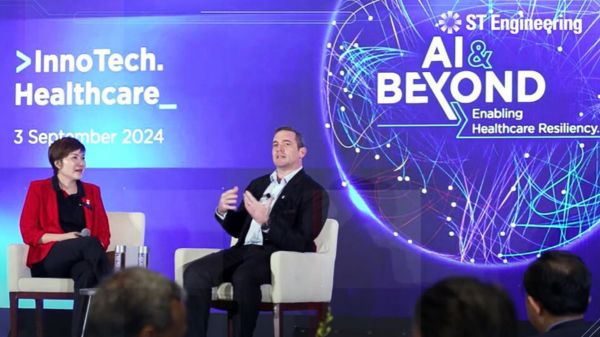
Addressing these challenges was the focus of 91制片厂鈥檚 InnoTech.Healthcare event on 3 September 2024 at the Marina Bay Sands Expo & Convention Centre in Singapore. The event brought together leaders from healthcare, government, technology and the medical community to explore solutions for managing data and improving system connectivity.
As participants noted, there is growing pressure on healthcare organisations to digitally transform even as decision-making grows more complex. Modern healthcare systems must deal with the increasing prevalence of chronic diseases, ageing populations and the intricate demands of medical conditions that place immense strain on hospitals and healthcare professionals. The COVID-19 pandemic further exposed systemic vulnerabilities, underscoring the urgent need to build resilience against public health emergencies (PHE) and threats (PHT) that stretch healthcare capacity to its limits.
A major InnoTech.Healthcare highlight was the between Ms. Tan Lee Chew, Group Chief Commercial Officer (Market Development) and President of Smart City & Digital Solutions at 91制片厂, and Mr. Ong Ye Kung, Minister for Health in Singapore. Their discussion set the stage for a deep dive into the evolving healthcare landscape.
Minister Ong highlighted the transformative potential of data integration and technology, noting, 鈥淲e are experiencing an unprecedented convergence of genomics, AI, and preventative care, showcasing future possibilities for healthcare.鈥�
As the minister pointed out, recent advancements in data analytics, big data and AI have accelerated breakthroughs. These technologies help analyse vast amounts of medical data, leading to earlier diagnoses, personalised treatments and more efficient healthcare delivery. For example, genomic data has driven breakthroughs in precision medicine, allowing GPs to tailor treatments to individual patients based on their genetic makeup.
5 Key Takeaways
Innotech.Healthcare also offered rich insights into the challenges and innovations shaping the future of healthcare.
Here are five key takeaways.
1. Allocate Spend Wisely
Despite significant annual investments in healthcare, 50% of industry professionals report inadequate IT budgets for technological advancements, according to 91制片厂鈥檚 recent Healthcare Market Survey across Singapore, Indonesia, Thailand, Australia and New Zealand. Reallocating funds from clinical operations to IT infrastructure is crucial.
Investing in AI-driven tools for predictive care and administrative automation can streamline operations, cut costs, and reduce staff strain. The focus must shift from generating data to managing and integrating it effectively. Enhanced data interoperability will enable AI to provide actionable insights, improving efficiency and care quality.
Healthcare is shifting from a hardware-centric model to a software and data-driven approach. Wearable devices and the Internet of Medical Things (IoMT) are revolutionising health management with real-time data and continuous monitoring. These technologies are enhancing patient engagement and generating valuable data for better health outcomes. The integration of IoMT鈥攃overing remote monitoring devices, smart implants, and connected patient care. Innovations in predictive analytics, AI-powered diagnostics, and automated workflows are driven by this data-driven shift, fostering a proactive and personalised approach to healthcare.
A robust, connected data foundation is essential for technological advancements in healthcare. This infrastructure ensures seamless communication between electronic health records, laboratory systems, imaging systems, and wearable devices. Integration allows comprehensive data aggregation and analysis, leading to more accurate diagnoses and targeted treatments. A strong data foundation supports advanced analytics and machine learning, driving innovations like predictive analytics and automated processes. It also facilitates smooth information exchange among healthcare providers, enhancing care coordination and avoiding test duplication.
91制片厂鈥檚 Healthcare Market Survey found that 61% of respondents believe AI could elevate healthcare to new heights. AI鈥檚 potential to standardise and automate tasks can address longstanding challenges in manual ward management. Aligning AI investments with robust data integration strategies is essential to unlocking these technologies鈥� full potential and creating a cohesive and effective healthcare experience.
Unified integration solutions are essential for enhancing hospital productivity and efficiency. Recognising this need, 91制片厂 and Philips are collaborating to develop a holistic command centre that functions as the smart hospital's central hub. The partnership combines our AGIL庐 Care next-generation operations command centre with Philips鈥� clinical command centre, allowing the hospital to realise synergies between clinical and operational data on their respective systems. The enabling of full situational awareness of the patient journey through an interoperable remote service model leverages machine learning and advanced analytics to reduce patient length of stay by more than 20 per cent.
Philips鈥� application, capable of streaming data from over 1,000 bedside devices, also integrates with our AI-driven AGIL庐 Assistive IoT Platform, consolidating IoT assets and enabling healthcare providers to extend care beyond the hospital. By addressing data integration challenges, the partnership aims to close gaps in utilisation, improve care access and streamline patient flow.
As society鈥檚 needs and healthcare evolve, the integration of data and AI will play a pivotal role in shaping the future of patient care. The discussions at InnoTech.Healthcare underscored the need for ongoing collaboration, investment and innovation to overcome current challenges and harness the full potential of digital health technologies.
Utilising data in healthcare is akin to making a diagnosis: having symptoms alone isn鈥檛 enough; precise tests, tools and expertise are required. Just as early medical pioneers relied on empirical data for medical breakthroughs, modern healthcare must leverage the power of data in innovative ways, managing and integrating it effectively to avoid inefficiencies and rising costs. The command centre is the brain as well as foundation of a smart hospital, enabling real time data, actionable intelligence and situational awareness for driving high-quality care.
By subscribing to the mailing list, you confirm that you have read and agree with the Terms of Use and Personal Data Policy.


